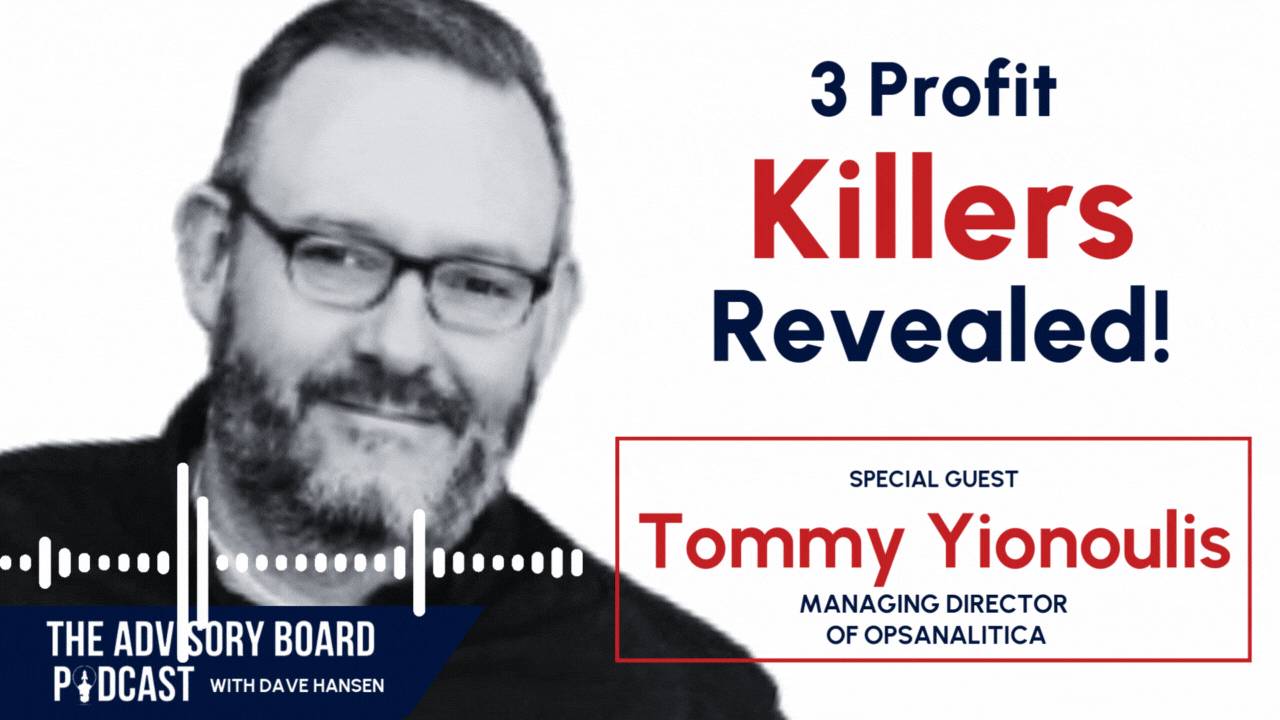
Franchise owners face a variety of challenges that can impact profitability. In a recent episode of The Advisory Board Podcast, Dave Hansen sat down with Tommy Yionoulis, Managing Director of OpsAnalitica, to discuss the three biggest profit killers in the franchise industry.
With decades of experience in restaurant operations and technology, Tommy has helped businesses streamline their processes, improve accountability, and increase profitability.
For franchise operators, the key to success lies in tracking labor costs, optimizing material usage, and improving the speed of service. Without structured processes, small inefficiencies can add up, cutting deep into a franchise’s bottom line.
In this conversation, Tommy outlines practical strategies that franchisees can implement to address these common pitfalls.
Below, we break down the key insights from the discussion and explore how franchise owners can take action to eliminate profit killers.
In this article
- Reduce labor inefficiency
- Control food cost leakage
- Improve operational consistency
Profit Killer 1: Labor Inefficiency
Labor is one of the highest controllable costs in a franchise business, which is why even small inefficiencies can have an outsized impact on profitability.
When scheduling is loose, accountability is low, or teams are not aligned around performance, labor costs rise faster than they should.
This is not always obvious at first. A location may still look busy, customers may still be served, and managers may feel like operations are under control.
But over time, margin pressure builds when staffing levels, productivity, and execution are not managed closely.
That is why labor inefficiency is such a common profit killer across franchise systems.
This is also consistent with how ClientTether frames other operations-focused podcast episodes: problems often compound before leaders see them clearly in the numbers.
What to watch for
- Labor costs rising without a matching increase in performance
- Inconsistent staffing practices across locations
- Weak accountability around shift execution
- Managers spending more time reacting than planning
How to respond
- Create clearer visibility into labor performance
- Standardize expectations across locations
- Give managers better systems for monitoring execution
- Review labor trends regularly instead of waiting for monthly surprises
The goal is not simply to cut hours. It is to make labor more productive, more predictable, and more aligned with operational reality.
Profit Killer 2: Food Cost Leakage
Food cost issues rarely come from one dramatic mistake.
More often, profitability erodes through small, repeated losses: waste, poor portion control, inconsistent prep, inventory gaps, and weak compliance with standards.
Over time, those small leaks turn into meaningful margin damage.
That is what makes food cost such a dangerous franchise profit killer.
It can hide in daily routines and go unnoticed when teams are focused only on revenue or top-line traffic.
The fix is not just better reporting. It is better operational discipline.
What to watch for
- Frequent waste or unexplained loss
- Inconsistent product prep or portioning
- Lack of visibility into inventory habits
- Location-to-location variation in standards
How to respond
- Tighten process compliance at the unit level
- Make cost control part of daily operations
- Identify repeat patterns instead of isolated incidents
- Coach locations before leakage becomes normalized
For franchise systems, food cost control is really a consistency issue.
The more variation there is between locations, the harder it becomes to protect margins across the network.
Profit Killer 3: Operational Inconsistency
The third major profit killer is operational inefficiency more broadly: missed checks, inconsistent execution, weak follow-through, and a lack of clear systems to keep locations on track.
This is the category that often amplifies the first two.
If operations are inconsistent, labor becomes harder to manage, and food cost issues become harder to control.
This is why operational discipline matters so much in franchising.
Strong systems do more than keep units compliant. They make performance more repeatable, coaching more effective, and problems easier to catch early.
That theme shows up across ClientTether’s franchise operations content as well: sustainable growth depends on visibility, process, and consistent execution.
What to watch for
- Recurring issues that are never fully resolved
- Inconsistent standards across units
- Limited visibility into day-to-day execution
- Reactive management instead of proactive oversight
How to respond
- Build repeatable systems for daily accountability
- Measure execution, not just outcomes
- Coach operators using clear operational signals
- Improve visibility before small problems become expensive ones
The real goal is to create a system where operators can spot issues earlier, respond faster, and maintain stronger consistency across every location.
Final Takeaway
The biggest franchise profit killers are often not dramatic. They are usually operational leaks that build over time: unproductive labor, preventable food cost loss, and inconsistent execution.
The conversation with Tommy Yionoulis points franchise leaders back to the same core principle: profitability improves when operators have clearer visibility and stronger systems.
For franchise brands, the practical takeaway is simple:
- Make labor efficiency a management priority
- Treat food cost control as a daily discipline
- Build systems that improve consistency across locations
Done well, those three changes can help protect margins, improve accountability, and create a healthier operating model across the franchise system.