
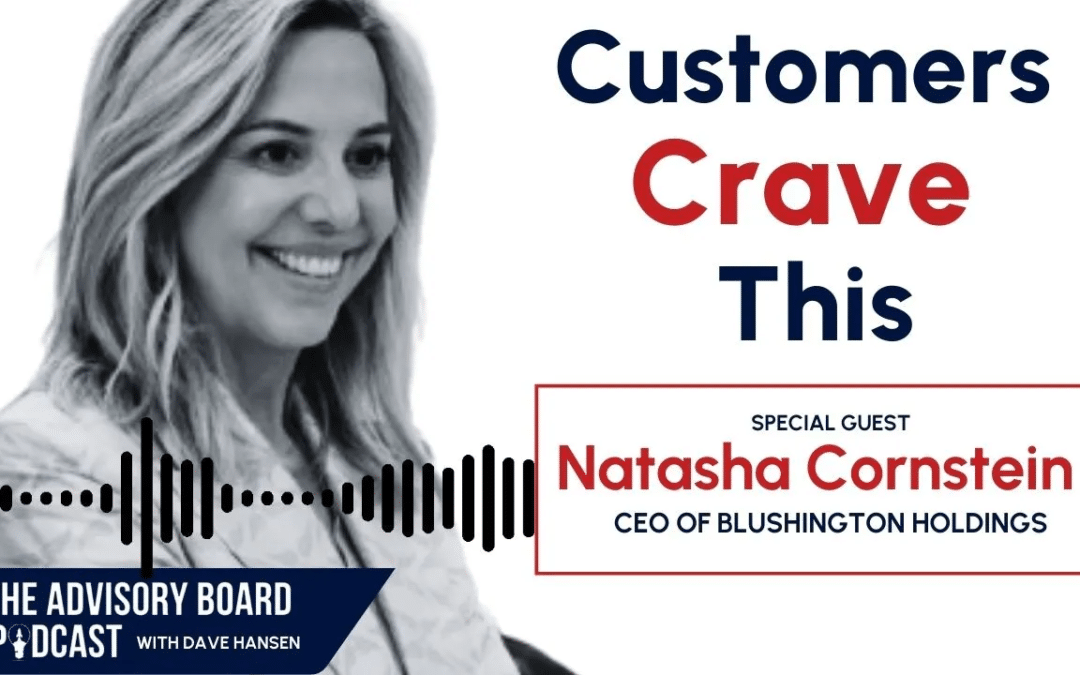
One of the things I value most about hosting The Franchise Advisory Board Podcast is that every so often, a conversation comes along that starts in one category and ends up speaking to every business owner I know.
That was this conversation with Natasha Cornstein, CEO of Blushington.
On paper, this episode is about beauty, customer experience, and franchising. In reality, it is about something deeper: what happens when a company decides that making people feel heard is not a soft skill or a side note, but part of the actual business model.
Natasha gave language to something a lot of leaders feel but do not always operationalize well. Customer experience is not just about atmosphere. It shapes trust. It shapes culture. It shapes retention. And yes, it shapes revenue.
Meet Natasha Cornstein
Before we got into the broader business lessons, I wanted listeners to understand why Natasha was such a compelling guest for this conversation. She leads Blushington, a brand built around personalized beauty experiences, and she talks about the business with the kind of clarity that tells you she is thinking about far more than services on a menu.
What stood out to me right away is how she framed the purpose of the company. Not around transactions. Not around trends. Around how people feel when they walk in and when they leave.
“Blushington is all about the experience to make our customers feel beautiful and confidence. We always say confidence looks great on you.” — Natasha Cornstein
She also shared that Blushington’s first franchise openings in Boca Raton and Houston are being led by longtime customers. That says a lot. When people buy into a brand after experiencing it firsthand, that is usually a sign that the experience is doing exactly what the brand hoped it would do.
Key Lessons & Takeaways
Customer experience is not a decoration around the business. It is the business.
One of the clearest takeaways from this conversation was that Natasha does not treat customer experience like a branding layer sitting on top of operations. She treats it like the engine.
What she described was not vague or abstract. It was incredibly concrete: the greeting, the tone of voice, the cleanliness of the store, the way a service is performed, the way a guest is listened to, the way details are handled at every touchpoint. That is what creates the overall feeling. And that overall feeling is what determines whether someone comes back, tells others, and trusts the brand enough to deepen the relationship.
That is true in beauty. It is also true in home services, restaurants, automotive, senior care, and just about every franchise category I can think of.
“It’s all those little details that add up to the overall feeling, the overall experience.” — Natasha Cornstein
If people do not feel heard, the experience breaks down fast.
One part of this conversation I found especially important was Natasha’s emphasis on being heard. That is not always the first thing people associate with a beauty service, but it should be.
She talked about how easy it is for someone to leave a salon or beauty chair not feeling like themselves, not because the provider lacked technical skill, but because no one really listened. That is where experience and empathy come together. Blushington’s model is built around conversation, personalization, and making sure the customer does not feel railroaded into someone else’s idea of what looks good.
That standard requires more than talent. It requires the right kind of temperament. Natasha was very clear that when they hire, they are looking for both.
“We’re looking for that combination of talent and temperament.” — Natasha Cornstein
Power listening changes culture from the inside out.
We spent a good part of this episode talking about what Natasha calls power listening, and I thought that phrase was exactly right.
A lot of people appear to be listening when really they are just waiting for their turn to speak. Natasha’s point was that real listening takes discipline. It takes enough confidence to stop preparing your rebuttal and actually hear what another person is saying. That applies to customer conversations, team conversations, and leadership decisions.
What I appreciate about this idea is that she does not talk about listening as a personality trait. She talks about it as a cultural practice. When people trust that they will be heard, collaboration improves. Ideas improve. Execution improves. The whole environment gets healthier.
“Give everyone the grace to listen.” — Natasha Cornstein
Some of the best ideas in a business will come from the people closest to the work.
One of my favorite parts of the episode was Natasha’s story about introducing wig styling services. The idea came from one of their artists, not from the CEO’s office. From there, the team researched it, trained for it, built a plan around it, and turned it into a real offering.
That is such an important leadership lesson, especially in franchising.
The people in the field are the ones closest to customers, closest to demand shifts, and closest to the friction points in the experience. If leadership creates a culture where those ideas can surface and get a fair hearing, the business gets smarter. If leadership insists that the best ideas have to come from the top, it usually leaves growth on the table.
Natasha clearly understands that. And as Blushington grows through franchising, that mindset is going to matter even more.
“The best ideas will always come from your team in the field.” — Natasha Cornstein
Inclusivity has to live in the brand DNA, not just in the messaging.
Natasha also spoke with real conviction about inclusivity, and what I appreciated is that she framed it operationally.
At Blushington, this is not about saying the right words. It is about training, inventory, hiring, and service standards that actually support customers of different ages, backgrounds, skin tones, and hair textures. She made the point that if you do not build that commitment into the system itself, you cannot genuinely deliver on the promise.
That distinction matters.
A lot of brands talk about inclusivity. Fewer do the work required to make people feel that inclusivity when they actually show up. Natasha made it clear that this has been part of Blushington since the beginning, and it comes through in the way she talks about the company.
“It starts with having that in your brand DNA.” — Natasha Cornstein
Wrap Up Thoughts
What I kept thinking about after this conversation is how often businesses separate customer experience from business performance, as if one is emotional and the other is operational.
Natasha makes it very hard to keep that false distinction.
Listening affects trust. Trust affects retention. Retention affects consistency. Consistency affects revenue. And culture is sitting in the middle of all of it.
I also found myself thinking about franchising more broadly. The best systems do not just preserve a model. They create a model strong enough to scale and flexible enough to keep learning. Natasha’s approach to listening, hiring, inclusivity, and field-driven innovation fits that kind of growth.
For me, this episode was a reminder that if you want a brand to last, you have to think carefully about how people experience it at every level. Customers feel that. Teams feel that. Franchisees feel that.
And when they do, the business gets stronger in ways that a dashboard alone will never fully explain.
Listen & Watch the Full Conversation
Listen & Watch the Full Conversation
Watch the full episode on YouTube
Check out the Podcast hub Channel
Connect with Natasha Cornstein and Blushington