Some conversations stay with you because they go beyond growth tactics and get to the heart of leadership.
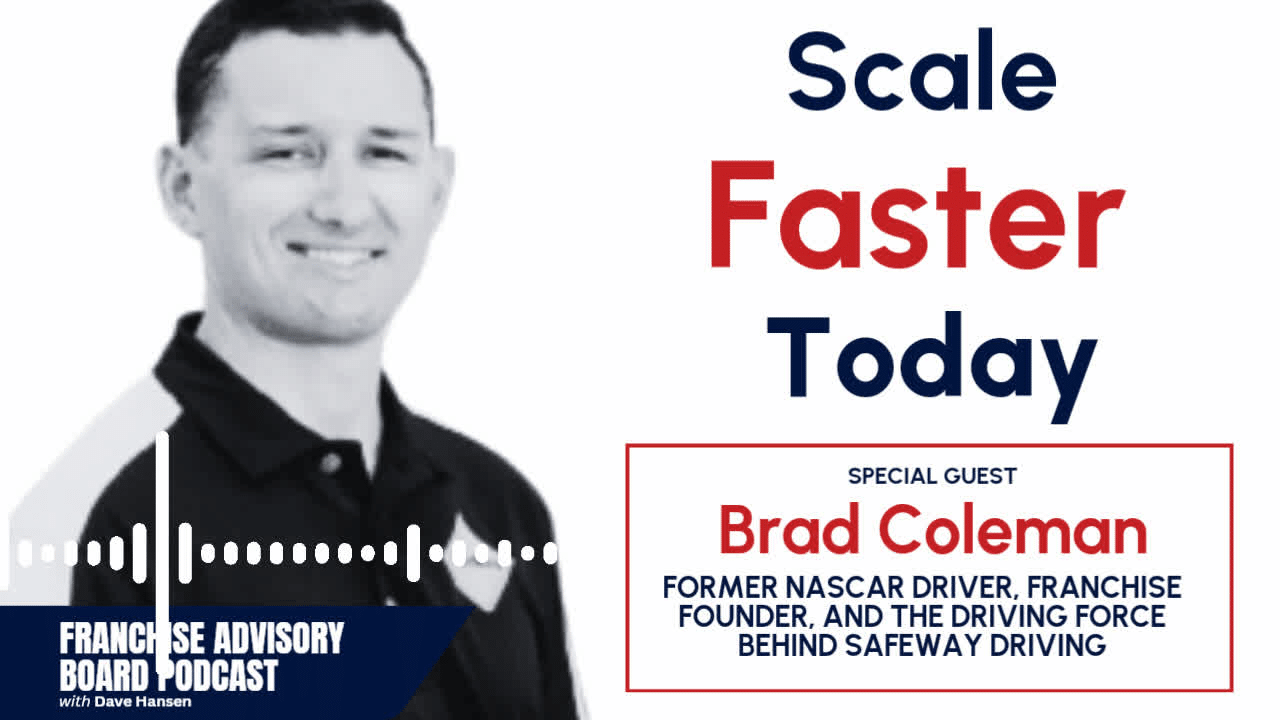
My conversation with Brad Coleman captured that perfectly. In the recent episode of The Franchise Advisory Board Podcast, I sat down with him to hear one of the most unique journeys I’ve encountered in franchising. Brad went from racing in NASCAR to helping lead one of Texas’s most recognized driving school brands. What made this discussion especially powerful wasn’t just the path he took—it was the way he broke down what it truly takes to breathe new life into a brand, rebuild trust, and shape a franchise system that people genuinely want to be part of.
This episode is about reinvention, but not in the flashy sense. It’s about doing the hard work of modernizing a legacy brand, listening to franchisees, fixing broken systems, and rebuilding from the foundation up.
Meet Brad Coleman
Brad Coleman is the CEO of SafeWay Driving, and his connection to the brand goes back long before he ever owned it. As a teenager in Houston, he went through SafeWay Driving himself while he was already pursuing a racing career. Years later, after racing in NASCAR and speaking to teens about distracted driving, that experience came full circle.
What I appreciate about Brad is that he is not trying to force a dramatic founder narrative. He tells the story like someone who genuinely cares about the mission and understands what the work requires. That comes through clearly in the conversation.
As Brad explained, his motivation shifted when he saw firsthand how distracted driving affected young drivers and realized he wanted to do something that could make people safer on the road.
“I would love to do something where I can just help people be safer drivers.”
That line tells you a lot about who Brad is. This was never just about acquiring a company. It was about building something meaningful around a mission he believed in.
Reinventing a brand starts with modernization, not reinvention for its own sake
One of the smartest things Brad shared was that when they acquired SafeWay Driving, they did not come in trying to throw out what already worked. The core system had real value. What needed attention was the experience around it.
They updated the locations, refreshed the feel of the brand, redesigned the vehicles, and made the business feel more current and recognizable to both students and parents. That kind of work matters more than people realize. When a brand feels neglected, customers can feel it. When it feels intentional, they can feel that too.
“We didn’t need to recreate anything. I just updated some things and modernized some things.”
That is such an important lesson for franchise brands. Not every turnaround requires a total identity shift. Sometimes it requires respecting the original value and making it visible again.
Strong outcomes come from consistent systems
Brad’s racing background shaped the way he approached instructor training. In racing, precision matters. Small inconsistencies can create major consequences. He brought that same mindset into the business.
When Brad stepped into SafeWay, instructor training relied too heavily on manual processes and inconsistent delivery. So they built a more structured training model, including online curriculum and recorded in-car training content, to ensure instructors were learning the same system the same way.
“Every instructor was going through the same curriculum.”
That is one of the clearest franchising lessons in the episode. If you want consistent outcomes, you need consistent tools, consistent systems, and a repeatable way to train people well.
Real differentiation is built into the way you teach
A lot of brands talk about safety, awareness, and standards. Brad explained what it looks like to actually train those things in practice.
What stood out most to me was SafeWay’s use of commentary driving. Instead of vaguely telling students to pay attention, they train them to verbalize what they are seeing, so awareness becomes an active habit rather than a passive idea.
“We don’t just say, ‘Okay, be aware of your surroundings.’ We give you tools.”
That is a strong reminder that a real competitive advantage is often operational. It is built into the experience, not just the marketing language around it.
Local ownership was a strategic choice, not just a growth model
When Brad talked about why they chose franchising, it was clear the decision was tied to mission as much as expansion.
They believed local owners would care more deeply about the people in their communities and could help SafeWay grow in a way that still felt personal.
That is a thoughtful way to approach franchising. It is not just about scale. It is about whether the model helps the brand stay connected to the people it serves.
“We saw the value in a local owner, small business that really cares about their customers and their community.”
That perspective matters, especially for brands where trust and community presence are central to the customer experience.
Selling a business can accelerate growth, but alignment still matters
Brad was candid about why they sold a majority stake in the company. The investor group brought business experience and capital, and the hope was that those resources would help fund faster growth.
That reasoning is understandable, and it is a decision many founders wrestle with. But Brad’s story also shows that growth capital and long-term alignment are not always the same thing. Over time, the strategy shifted away from franchising, even though the original team still believed in that path.
“We saw an opportunity for them to bring their expertise and just the extra capital to help fund the growth.”
That is one of the more valuable parts of the episode. It is a reminder to be clear not only on why you sell, but on whether the future vision is truly shared.
Turnarounds begin when leaders listen and then act
When Brad had the chance to buy the brand back, he did not come in trying to make a splash. He started by listening.
He brought in one of the franchisees to serve as president, met with franchisees one-on-one, asked what was working, and asked what was getting in the way. That kind of listening matters, but what mattered even more was that they followed it with action.
They rebuilt the online curriculum, updated systems, and addressed the issues franchisees said were holding them back.
“They’re listening to us, but they’re actually taking action on what we’re talking about.”
That is how trust starts to come back in a franchise system. Not through promises alone, but through visible follow-through.
Healthy culture returns when the mission becomes clear again
One of the strongest sections of the conversation came when Brad talked about bringing the brand back to its purpose. He said SafeWay exists to “prevent the phone call nobody wants.” That is a powerful way to frame the mission.
For a period of time, some franchisees felt pulled too far into daily frustrations and business pressures that distracted them from the deeper purpose of the brand. As support improved and systems got stronger, the culture started moving back toward what mattered most.
“Our purpose is to prevent the phone call nobody wants.”
That kind of clarity changes the way people work. It changes the way they lead, the way they serve, and the way they talk about the brand in their communities.
Before you grow again, repair the foundation
Brad used a phrase in this episode that really stayed with me: repair the foundation.
That mindset shaped the way they approached the next chapter of growth. Instead of reopening franchising too quickly, they spent years repairing systems, improving support, and updating the pieces that needed to be ready first.
That discipline is not always easy, especially when there is pressure to scale. But it is often the difference between growth that lasts and growth that creates bigger problems.
“If we started growing in the current state that it wouldn’t hold itself and that it would just collapse.”
That is real operational wisdom, and it applies far beyond this one brand.
Wrap Up Thoughts
What I appreciate most about Brad’s story is that it is honest.
It includes the excitement of growth, the complexity of selling, the frustration of seeing a brand drift, and the discipline required to rebuild it the right way. That kind of honesty is valuable because so many franchise leaders are navigating some version of these same decisions right now.
If there is one message that comes through clearly in this episode, it is this: healthy franchise growth is built on trust, mission, and strong systems. Not shortcuts. Not hype. Not speed for its own sake.
Brad and the SafeWay team did the hard work of rebuilding from the inside out. And when you hear how he talks about the mission, the franchisees, and the future of the brand, you can tell this next chapter is being built with a lot more clarity.
Listen & Watch the Full Conversation
Watch the full episode on YouTube
Check out the Podcast hub Channel
Connect with the guest’s company, SafeWay Driving
Connect with SafeWay Driving on LinkedIn