Lead generation in franchising isn’t getting simpler. Channels are multiplying, consumer behavior is shifting, and AI is changing how people search, choose, and engage with brands.
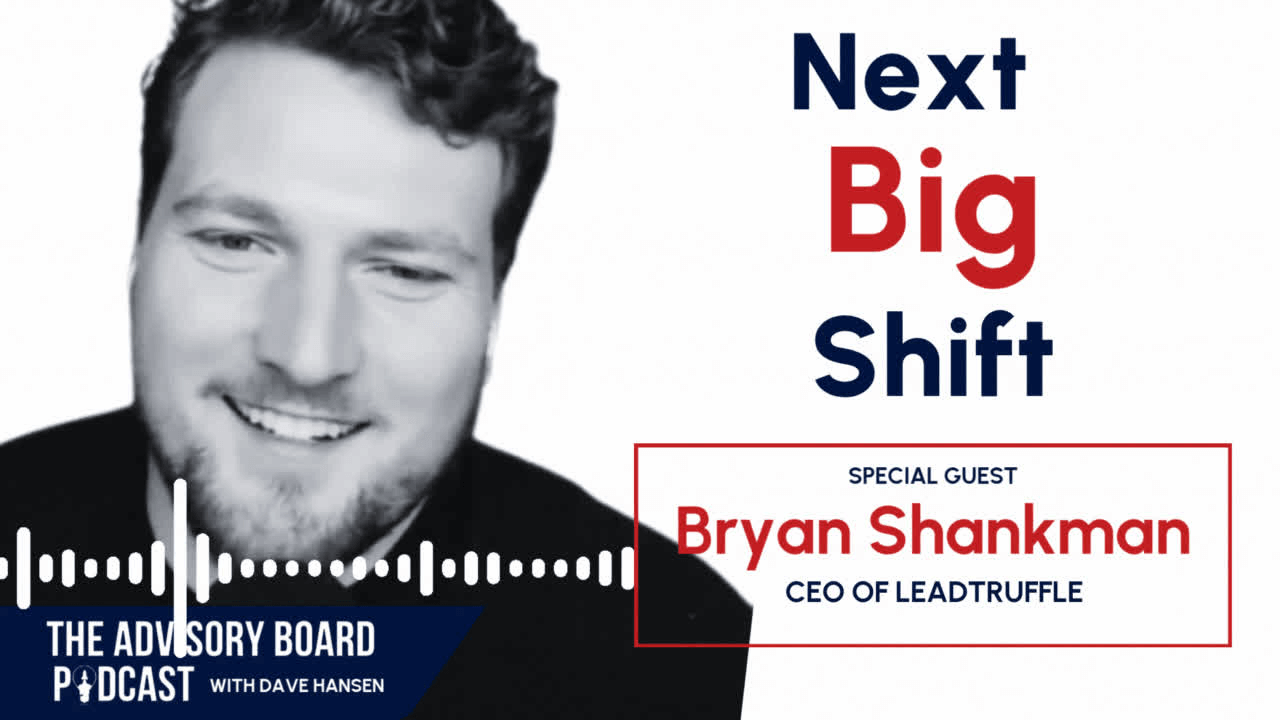
In this episode of The Advisory Board Podcast, I sat down with Bryan Shankman, Co-Founder and CEO of LeadTruffle, to unpack what’s actually working now — and where franchise leaders should focus if they want to stay ahead without building a Frankenstack.
Below are the key lessons from our conversation, with direct quotes from Bryan and timestamped links so you can jump right to each moment.
Meet Bryan Shankman
Before we dive into the tactics, it’s worth knowing who you’re hearing from.
Bryan Shankman is the Co-Founder and CEO of LeadTruffle, an AI-enabled sales automation platform focused on speed-to-lead and intelligent lead engagement for local and franchise businesses.
He’s spent most of the last decade in software startups, including joining Frame.io as one of the first 30 employees and riding it from early-stage through acquisition by Adobe. He also spent time at TikTok, picking up a front-row view of how modern content and attention work.
Bryan studied English in college — which means he actually knows how to communicate — and he jokes that he got his “MBA in startups” by building and selling software in the real world. Today, he’s a TinySeed-backed founder, a husband, and a new dad to a one-year-old daughter who he says is “the joy of my life.”
Day to day, he’s heads-down building AI tools for local business and helping owners never miss a lead, while still keeping room for the human connection that actually closes deals.
The Four Buckets of Lead Capture Today
Lead capture feels more complex than ever, but the underlying structure is still surprisingly simple. For local and franchise businesses, most leads still fall into four main buckets:
- Third-party aggregators – Angi, HomeAdvisor, Google, etc.
- Out-of-home marketing – truck wraps, Little League sponsorships, billboards.
- Your website – forms, chat, and click-to-call.
- The phone – direct inbound phone calls.
No matter where the lead starts, the website and the phone are where the real conversations tend to land.
“The phone — from what we’ve seen, the real 80/20 of value for our customers and where we see most of the leads eventually get in contact with the business — are through the website and phone.”
— Bryan Shankman
The Rise of Reddit (and TikTok) for Local Discovery
Reddit is no longer just a niche internet forum; it’s a front-door to Google’s first page and a major input into AI training data. That means it’s quietly influencing both traditional search and AI-driven recommendations.
Bryan calls out how often local intent shows up there: people asking for “a great barber in Austin,” “a reliable plumber near me,” or a trusted local service. TikTok is following a similar path — increasingly local, heavily location-tagged, and surfacing businesses organically.
“Reddit really eats up a lot of the front page of Google… and a lot of the training data for these AI tools comes from Reddit. For local businesses, if you can get on Reddit and into those threads, that’s really helpful in itself — and it’s feeding what ChatGPT will recommend.”
— Bryan Shankman
How AI Is Reshaping Consumer Behavior
Consumers are still “Googling,” but more and more, they’re asking LLMs (like ChatGPT and Gemini) for answers, ideas, and even local recommendations.
Where people used to type queries into a browser, they’re now talking to AI as a kind of always-on advisor — for cooking, parenting, pets, fitness, and local services.
“I was always a huge Google guy… but increasingly the answer to ‘How do you know that?’ is becoming ChatGPT. A lot of that consumer mindshare is moving off the search engines and into the LLMs and ChatGPT and Gemini.”
— Bryan Shankman
Where Automation Works — and Where It Fails
There’s a strong emotional pull for customers to talk to a real human when the stakes feel high:
- Pest infestation
- Medical or mental health concerns
- Home issues that feel urgent or expensive
That’s where over-automating can backfire. AI shines in intake, screening, FAQ, routing, and scheduling — but it shouldn’t replace human reassurance in complex or emotionally loaded scenarios.
“Where AI goes wrong is when people over-index on using it instead of connecting to a human. There’s this emotional impulse to talk to someone who can reassure you that the problem you’re facing can be solved.”
— Bryan Shankman
Smarter Follow-Up & Post-Sale Automation
The post-sale window is where most brands quietly lose money:
- No systematic follow-up after a big job
- No structured review-request process
- No reactivation of previous happy customers
AI and automation can quietly handle the tedious parts: surfacing accounts that are due for a check-in, sending tailored follow-up messages, and routing unhappy customers to the owner before a bad review goes public.
“We see tons of great use cases around identifying folks to follow up with — maybe you did a big job six months ago and now might be a good time to reach out. Or asking for reviews… and if they had a problem, ping the owner so they can call and figure out why it wasn’t a five-star review.”
— Bryan Shankman
Future-Proofing Without Building a Frankenstack
A lot of owners respond to new tools by layering on more tech until they end up with a tangled stack of systems and Zaps that no one fully understands.
Bryan’s advice is refreshingly simple:
- Prioritize responsiveness (answer fast).
- Do excellent work with a personal touch.
- Nail the basics (Google Business Profile, clear website, reviews).
- Then plug AI into narrowly defined tasks with clear outcomes.
“I would say just keep it simple and focus on what really matters. When someone gets in contact with your business, put systems in place so you respond quickly. You don’t need crazy AI to do that.”
— Bryan Shankman
Wrap-Up Thoughts
There’s a lot of noise in the world of lead generation right now — new platforms, new tools, new “AI-powered” everything. But conversations like this one with Bryan are a great reminder that the fundamentals haven’t changed. What has changed is the environment around those fundamentals.
People still want fast responses.
People still want clarity.
People still want to talk to someone who knows what they’re doing when the moment calls for it.
The brands that win aren’t the ones with the most tech — they’re the ones that stay grounded in responsiveness, human connection, and smart use of automation where it actually helps. Bryan’s insights highlight that balance beautifully: use AI to remove friction, not relationships. Use automation to create consistency, not complexity. And keep your systems simple enough that your team can actually execute on them.
If you’re building a franchise system, or supporting local owners who are, these ideas aren’t just “nice-to-have” — they’re now the cost of staying competitive in a marketplace where consumer expectations are evolving faster than ever.
Listen & Watch the Full Conversation
Listen & Watch the Full Conversation
Check out the Podcast Hub Channel
Connect With Bryan Shankman and LeadTruffle