Managing a growing franchise network becomes increasingly complex as you add locations, franchisees, employees, processes, and customers.
Spreadsheets, email threads, disconnected software, and manual follow-ups may work when you have a few locations. But as your franchise system grows, these tools can create information silos, missed tasks, inconsistent processes, and limited visibility across your network.
Franchise operations software provides a centralized way to manage franchise operations, coordinate franchisees, automate workflows, improve communication, and monitor performance across locations.
For franchisors looking to bring franchise development and ongoing unit operations together, a franchise-specific CRM such as ClientTether can provide a single system for managing the franchise lifecycle—from lead generation and franchise sales through onboarding and ongoing operations.
See How ClientTether Can Simplify Your Franchise Operations
What Is Franchise Operations Software?
Franchise operations software is technology designed to help franchisors and franchise teams manage the day-to-day activities of a franchise network.
Rather than managing operational information across spreadsheets, email, messaging apps, shared drives, and disconnected systems, franchise operations software brings important processes together in one centralized platform.
Depending on the software, capabilities may include:
- Franchisee management
- Multi-location management
- Task and workflow management
- Operational checklists
- Franchisee communication
- Compliance tracking
- Document management
- Training and onboarding
- Reporting and analytics
- Automated notifications
- Performance monitoring
- Customer relationship management
The objective is straightforward: make franchise operations more consistent, measurable, and scalable.
Why Franchise-Specific Software Matters
Generic project management platforms and traditional CRMs can be useful, but franchise organizations have unique operational requirements that will make these insufficient as the brand continues to grow.
A franchise system needs to manage relationships between franchisors, franchisees, prospects, customers, field teams, and corporate departments.
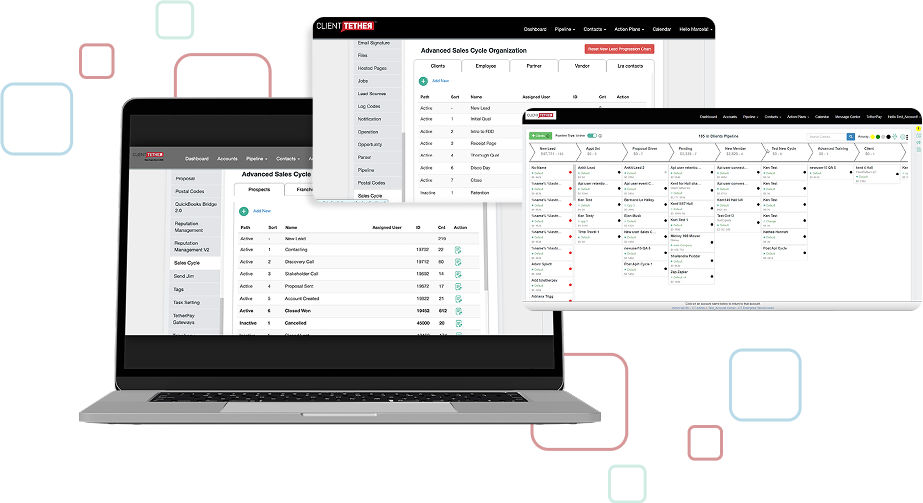
ClientTether was built specifically around the franchise model, combining franchise development and unit operations in one franchise CRM. Its platform provides tools for pipeline management, automated workflows, franchisee onboarding, task management, reporting, communication, and multi-brand management. Where other tools can provide some of these features, they typically require multiple systems or custom development that requires months and tens of thousands of dollars to implement.
Ready to Centralize Your Franchise Operations?
Stop managing your franchise network across disconnected tools.
What Does Franchise Operations Software Do?
The capabilities vary between platforms, but effective franchise operations software should help corporate teams manage the processes that keep franchise locations operating consistently.
Centralize Franchise Operations
One of the biggest challenges facing growing franchise systems is information fragmentation.
Operational information may exist in spreadsheets, email accounts, cloud storage, CRM records, messaging platforms, field service management tools, and other systems.
A centralized franchise management system gives corporate teams and franchisees more than a shared source of information. The best franchise operations tools become the system of record and a productivity tool for owners. The system should help reinforce standardized behaviors, automate unit-level reporting, and enhance owner effort – rather than detract from it.
ClientTether, for example, is designed to centralize franchise development and unit operations with sales and operational automations that can systematize brand experiences nationwide and augment franchise owner performance. It also provides native role-based access and data visibility across the franchise system.
Manage Multiple Franchise Locations
Managing one location is very different from managing dozens or hundreds.
Franchise operations software allows organizations to organize information by location, franchisee, region, brand, or other business criteria.
This makes it easier to identify operational issues and understand how individual locations are performing, when their data can be analyzed collectively, against specific peer groups, or individually from the home office.
The best franchise software tools also have processes in place to rapidly deploy new franchise locations with uniform systems in place to enforce brand standards and best practices.
When evaluating tools to help you manage your franchise location, scalability of deployment and ease of location management are two critical factors to consider.
Standardize Processes and Procedures
Consistency is one of the foundations of franchising.
Every franchisee should understand what needs to be done, when it needs to be completed, and what standard they are expected to meet.
Where typical software solutions struggle to systematize across multi-location business models, top franchise operations tools can turn these requirements into standardized workflows, tasks, checklists, text messages, calls, emails, and automated reminders.
Franchise brands that focus on creating replicable solutions for local owners, especially franchise software tools that can simplify their workload, will naturally create scalability for their system.
Improve Franchisee Communication
As franchise networks grow, communication becomes harder to manage.
Important messages can become buried in email, while franchisees may receive different information from different members of the corporate team.
Centralized omnichannel communication and automated notifications can create a more consistent franchisee experience, and can break down the barriers that naturally start to form between the franchisor and franchisee.
Also, home office staff will often work in communication silos that create a disjointed franchise owner experience. Marketing has a conversation with an owner that legal and operations should know about, but it happened on their personal cell phone. When working with the right franchise software tools, all franchisor team members communicate through a single system, to centralize communications and record keeping.
Monitor Franchisee Performance
Operational reporting provides franchisors with greater visibility into what is happening across their network.
Instead of relying exclusively on manual updates, leadership can use dashboards and reports to identify trends, bottlenecks, and locations that may need additional support.
Additionally, when using franchise specific solutions, such as ClientTether, the native dashboards will also highlight who is outperforming their peers and can be coaches to those struggling.
Turn Visibility Into Action
Do you know which franchisees are completing their tasks, which leads need follow-up, and which locations need attention?
ClientTether provides real-time visibility into franchise activity, reporting, lead progression, and unit-level operations so your team can spend less time chasing information and more time acting on it.
Key Features of Franchise Operations Software
When evaluating franchise operations management software, focus on features that solve actual operational problems—not simply the number of features included in a product.
Franchisee and Location Management
A franchise operations platform should make it easy to organize franchisees, locations, contacts, and operational information.
ClientTether supports multiple contact types, role-based views and permissions, and multi-brand management, making it suitable for franchise organizations with complex structures.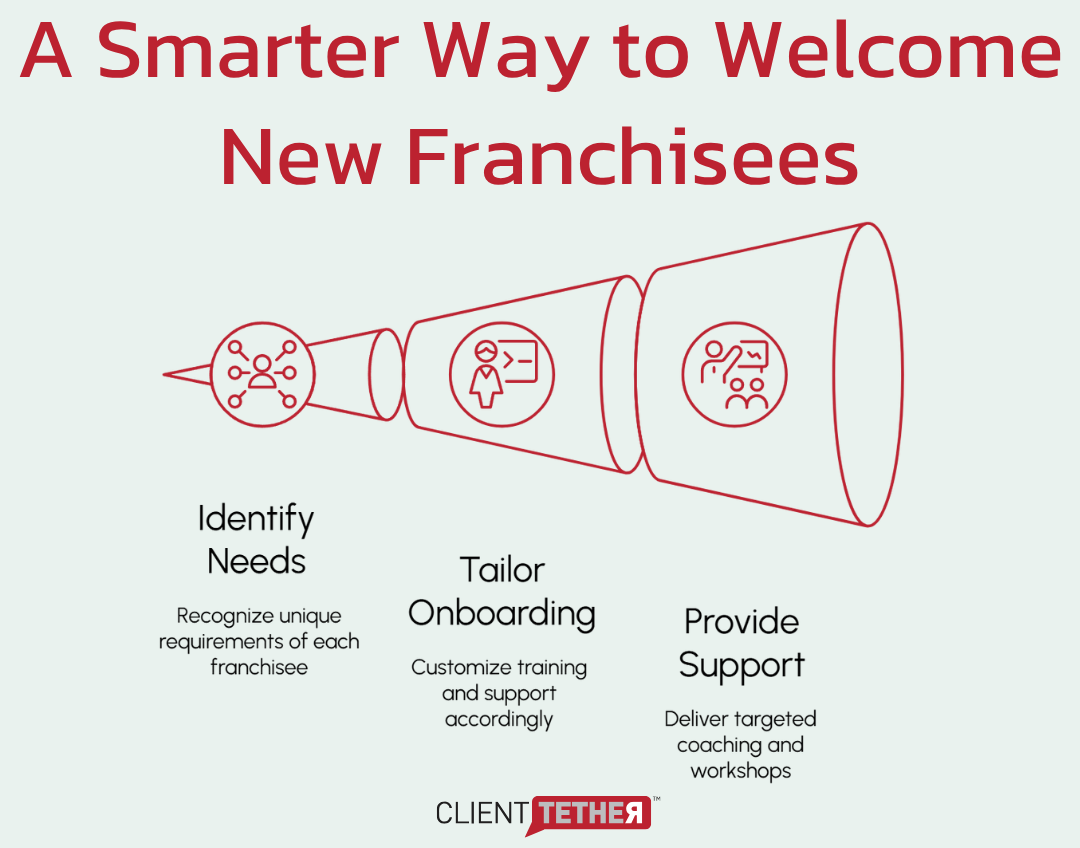
Task and Workflow Management
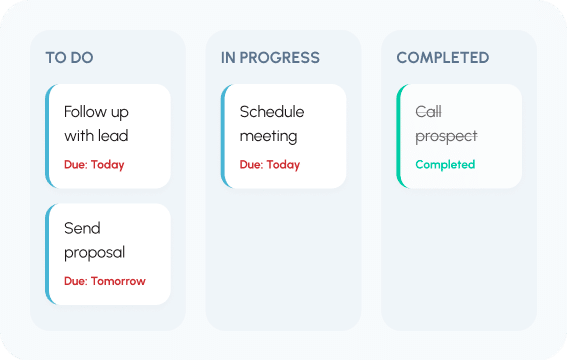
Recurring operational tasks are an ideal candidate for automation.
For example, franchisees may need to:
- Complete weekly inspections
- Submit monthly information
- Review new procedures
- Complete training
- Follow up with customers
- Submit documentation
- Complete marketing activities
Instead of relying on memory or manual reminders, software can automatically assign tasks, establish deadlines, trigger notifications, and track completion.
Operational Checklists
Checklists can standardize important processes across locations.
They can be used for:
- Opening procedures
- Closing procedures
- Inspections
- New-location launches
- Training
- Compliance
- Recurring operational activities
Compliance Management
Franchise compliance becomes increasingly challenging as networks expand.
Franchise compliance software can help corporate teams monitor whether franchisees have completed required activities and identify locations that require additional attention.
Document Management
Franchisees frequently need access to operating procedures, marketing materials, training resources, forms, and other documents.
A centralized system makes those resources easier to access while reducing the likelihood of outdated information being used.
Reporting and Analytics
Reporting transforms operational data into actionable information.
Franchise leaders can use reporting to understand:
- Task completion
- Franchisee activity
- Lead progression
- Conversion rates
- Revenue
- Location performance
- Operational trends
ClientTether offers reporting around lead conversion, lead progression, attribution, user activity, royalties, and other franchise-specific metrics.
Training and Onboarding
A standardized onboarding process can help new franchisees understand your systems, processes, expectations, and brand standards.
ClientTether can help augment training processes through automated touchpoints via text, email, and calls. This can help franchisors create a more consistent franchisee onboarding experience.
Benefits of Franchise Operations Software
Implementing franchise operations software can improve both corporate efficiency and franchisee performance.
Increase Operational Efficiency
Manual administration consumes time that could otherwise be spent supporting franchisees and growing the brand.
Automating recurring workflows, notifications, communication, and reporting can reduce administrative overhead and help your field business coaches focus their efforts into higher yield activities and proactive outreach.
Improve Franchisee Accountability
When responsibilities are clearly assigned and deadlines are visible, franchisees have greater accountability.
Corporate teams can also quickly identify incomplete tasks without manually contacting every location.
Maintain Brand Consistency
Franchises succeed by creating a consistent customer experience.
Standardized workflows, training, documentation, and operational checklists help ensure franchisees follow established processes.
Improve Communication
Centralized communication makes it easier to distribute information and maintain a record of interactions.
ClientTether includes native 2-way texting, calling, email, activity logging, and communication tools that can keep interactions connected to the appropriate records.
Make Better Data-Driven Decisions
Operational data can help franchisors identify patterns that aren’t obvious from individual conversations.
For example, if several locations consistently struggle with the same process, corporate leadership can identify the pattern and create targeted training or support.
Scale More Efficiently
Perhaps the biggest advantage is scalability.
Your corporate team should be able to support more franchisees without increasing administrative work at the same rate. This is increasingly important as operating expenses rise. Franchise brands need to increase their FBC to Franchise Owner ratios without decreasing their support levels.
Built for Franchise Growth
ClientTether reports results including 300% increases in franchise sales, 278% increases in lead conversion, and 300% increases in team output among featured franchise customers.
Find Out What ClientTether Could Do for Your Franchise
Franchise Operations Software vs. Franchise Management Software
The terms franchise operations software and franchise management software are sometimes used interchangeably.
Franchise management software is generally a broader category that can include franchise development, franchisee management, communication, operations, reporting, and other franchise-related activities. They will also include learning management systems, document repositories, field audit and compliance tools, etc.
Franchise operations software focuses more specifically on the day-to-day execution of franchise operations.
The ideal platform may combine both.
This is one reason franchise-specific CRM platforms can be particularly valuable.
Instead of separating franchise development from ongoing operations, ClientTether is designed to connect the lifecycle from candidate to franchisee to customer within one system.
Explore ClientTether’s Franchise Management Software
Franchise Operations Software vs. CRM Software
Traditional CRM software is generally designed around customer or prospect relationship management.
For a franchisor, that might mean managing franchise sales leads and prospects.
Franchise operations software addresses what happens after the franchise relationship begins.
The challenge is that these two processes are connected.
A franchise prospect eventually becomes a franchisee. That franchisee opens a location. That location acquires customers. Those customers generate revenue and operational data.
Keeping those relationships in separate systems can create information gaps.
ClientTether takes a different approach by combining FranDev and unit operations within one franchise CRM.
One Platform. More Visibility.
Instead of asking:
“Which system contains that information?”
Your team can work from a centralized franchise platform that provides insights into franchise owner behavior. This can create dramatic scale and perceived competence for field business coaches.
Who Needs Franchise Operations Software?
Emerging Franchise Systems
Growing franchise brands can establish standardized processes before operational complexity becomes a major problem. This is the best time to make franchise software decisions, but often emerging franchise brands are so caught up in refining their core processes, that they forget to design systems that can scale them.
Established Franchise Networks
Larger systems often have made expensive mistakes in their franchise tech stack. They need the right franchise operations software to centralize field business coaches’ efforts across locations to reduce administrative overhead.
Multi-Unit Franchisees
Owners operating multiple locations can use centralized tools to organize tasks, communications, customers, and performance.
Franchise Operations Teams
Operations managers and FBCs can use dashboards, pipelines, and activity reports to monitor franchisee behavior and identify locations requiring additional support.
Rather than spending 15-30 minutes interrogating franchise owners about their performance to try to understand trends, they will show up prepared for each franchise coaching call with insights about the franchise owner behaviors and how they stack against their peers. This can reduce overhead for FBCs by 30-40%, and it improves the relationship between franchisors and franchisees.
Franchise Sales Organizations
Franchise Sales Organizations (FSOs) and franchise platform companies managing multiple franchise brands can benefit from multi-brand visibility and centralized pipeline visibility.
ClientTether specifically supports both teams with multi-brand management, pipeline visibility, automated follow-up, and reporting.
See How ClientTether Supports FSOs
How to Choose the Best Franchise Operations Software
Selecting the right platform requires more than comparing feature lists.
Start by identifying your biggest operational problems.
Are you struggling with:
- Franchisee communication?
- Manual reporting?
- Missed tasks?
- Lead follow-up?
- Disconnected systems?
- Poor visibility?
- Inconsistent onboarding?
- Franchisee accountability?
Then evaluate software against those problems.
1. Look for Franchise-Specific Functionality
Generic CRM or project management software may require extensive customization, expensive and often ongoing consultant support, and will take many months to build out and deploy.
A franchise-specific platform is designed out of the box to support the relationships between franchisors, franchisees, locations, candidates, and customers. These relationships should be mapped appropriately within the database to streamline reporting.
2. Evaluate Scalability
Your software should support your current franchise network while being capable of handling future growth. Make sure to think 5-10 years down the road when evaluating software solutions. Is the supplier experienced enough to help and have they proven their tools can be used with brands with more than 100 locations?
3. Prioritize Ease of Use
If franchisees or your home office team find the software difficult to use, adoption will suffer.
4. Look for Automation
Automation should eliminate repetitive administrative work rather than simply add another layer of technology.
ClientTether offers automated lead capture, sales automation, franchise owner workflow automation, automated communications, and task management.
5. Evaluate Reporting
The platform should help you understand what is happening throughout your franchise system. The out of the box reporting should reflect this. If your Franchise CRM or other technology provider introduces you to 3rd party solutions as an answer to your reporting needs, they clearly were not built for franchising.
6. Check Integrations
Consider integration with your CRM, accounting, payment, marketing, communication, and other systems.
ClientTether, for example, offers QuickBooks integration and payment-processing capabilities alongside its natively integrated call, email, text and broad franchise CRM functionality.
7. Consider Mobile Accessibility
Field teams and franchisees aren’t always sitting at a desk. Your Franchise operations software should be accessible via a browser and a mobile app.
8. Evaluate Customer Support
Implementation, training, and adoption are critical components of software ROI. If their answer to your question is to submit a ticket and wait for an answer, you should run away screaming. Make sure you have domestic support staff you can reach when something goes wrong.
Compare Your Current System
Still managing franchise operations across multiple platforms?
See how a franchise-specific CRM can consolidate your sales, onboarding, communications, automation, and operational processes.
How Much Does Franchise Operations Software Cost?
Pricing varies depending on the provider, number of users and locations, functionality, integrations, and implementation requirements.
Common pricing models include:
- Per-user pricing
- Per-location pricing
- Monthly subscriptions
- Annual subscriptions
- Custom enterprise pricing
Beware of per-user license models for franchise operations software. That’s a red flag that the software wasn’t designed for the franchising industry. These cost curves are exponential as well, so as you grow, your software costs will far outpace your planned budgets.
However, price should not be the only consideration.
The more important question is:
What will the software save money or generate additional revenue for your franchise owners?
If automation saves your team hours every week, faster lead response increases conversions, and better operational visibility reduces problems across locations, the ROI can extend well beyond the software subscription.
This is were sophisticated franchise brands will evaluate Total Cost of Ownership (TCO) and true return on investment of a platform, rather than exclusively the cost model.
ClientTether’s platform is built around measurable franchise outcomes, including lead conversion, productivity, operational visibility, and franchise growth. When evaluated against other franchise CRMs and franchise software systems, it leads the pack in true ROI with the lowest TCO.
See ClientTether Pricing and Options
How to Implement Franchise Operations Software
Successful implementation requires more than purchasing software.
Step 1: Audit Your Current Processes
Document how your organization currently manages tasks, communication, reporting, onboarding, compliance, and franchisee support. Systematize your processes. Until they’re systematized, they cannot be automated.
Step 2: Identify Bottlenecks
Find the processes consuming the most time or generating the most errors. Ask your FBCs where they get bogged down in their day-to-day tasks. Ask the franchise owners what prevents them from getting more deals or increasing their revenue. Document this, and solve for it.
Step 3: Build Standardized Workflows
Turn repetitive activities into standardized workflows, templates, and automated processes. Use ClientTether’s Action Plans to automate everything.
Step 4: Configure Your Platform
Set up users, locations, permissions, workflows, notifications, documents, and reporting. There should be a strategic account manager or onboarding manager dedicated to your success with a project of this nature. If you have to deploy this franchise software on your own, you’ve likely made a mistake.
Step 5: Train Your Corporate Team
Make sure internal teams understand the system thoroughly before introducing it to franchisees.
Step 6: Onboard Franchisees
Ideally, you will want to start with a pilot group to work out the kinks and to become a vocal advocacy group among their peers.
Explain how the software will simplify their daily responsibilities and will increase their revenue—not just how to use the software. Remember to start with Why. Always.
Step 7: Measure Adoption
Monitor usage, completion rates, and feedback. If you have picked the right franchise software partner, this should be one of the easiest parts of the process. The system should be providing this feedback for you.
Step 8: Continuously Optimize
Your franchise system will evolve, so your workflows should evolve with it. You will want to assign a team member to evaluate ways to improve your use of the platform continuously.
Common Franchise Operations Challenges Software Can Solve
As franchise networks grow, several problems tend to appear.
Poor Communication
Important messages become buried in email.
Inconsistent Processes
Different locations begin handling the same process differently.
Limited Visibility
Corporate teams don’t know what is happening across locations.
Manual Reporting
Employees spend hours collecting and organizing information.
Missed Tasks
Franchisees forget recurring responsibilities.
Compliance Issues
Corporate teams struggle to monitor operational standards.
Information Silos
Critical information exists across multiple disconnected platforms.
A centralized franchise CRM can address many of these issues by connecting people, processes, data, and communications.
Franchise Operations KPIs to Track
The right KPIs depend on your franchise model, but useful metrics can include:
- Task completion rate
- Compliance rate
- Audit scores
- Training completion
- Franchisee engagement
- Revenue per location
- Customer satisfaction
- Franchisee turnover
- Location profitability
- Operational issue resolution time
- Lead conversion rate
- Lead response time
- Franchise sales cycle length
The goal isn’t to collect data simply for the sake of having more dashboards.
The goal is to turn data into actionable insights.
The Future of Franchise Operations Software
Franchise technology is becoming increasingly automated and data-driven.
Artificial intelligence, predictive analytics, workflow automation, and increasingly sophisticated integrations will continue to change how franchise organizations operate.
AI-powered systems can help teams identify patterns, automate repetitive processes, summarize information, and provide recommendations.
ClientTether is already incorporating automation and AI capabilities into its franchise technology ecosystem, alongside workflow automation, reporting, and communication tools.
For franchise organizations, the future isn’t simply about having more technology.
It’s about having technology that removes work, improves visibility, and helps teams make better decisions.
Frequently Asked Questions About Franchise Operations Software
What is franchise operations software?
Franchise operations software is a technology platform that helps franchisors and franchisees manage day-to-day operational activities, including tasks, workflows, communication, compliance, documentation, training, and reporting.
What is the best software for managing franchise operations?
The best franchise operations software depends on your organization’s size, operational requirements, number of locations, budget, and technology stack. A franchise-specific platform such as ClientTether can be particularly useful for organizations looking to combine franchise development and unit operations.
How does franchise operations software help franchisors?
It provides greater visibility into franchise operations, improves communication, standardizes processes, automates repetitive tasks, and helps corporate teams monitor franchisee performance.
Can franchise operations software manage multiple locations?
Yes. Multi-location management is one of the primary use cases for franchise operations software.
How much does franchise operations software cost?
Pricing varies by provider and typically depends on factors such as users, locations, features, integrations, and implementation requirements.
What features should franchise operations software have?
Important features can include task management, workflow automation, franchisee management, compliance tracking, communication, document management, reporting, analytics, training, notifications, and integrations.
Can franchise operations software integrate with a CRM?
Yes. Some platforms integrate with other CRMs and business systems. Others, such as ClientTether, combine CRM functionality and franchise operations capabilities within the same platform.
Is franchise operations software useful for small franchises?
Yes. Implementing standardized processes early can help smaller franchise systems establish scalable infrastructure before they experience significant operational complexity.
How long does it take to implement franchise operations software?
Implementation time varies according to the complexity of the organization, number of locations, data migration requirements, integrations, and workflows.
What is the difference between franchise management and operations software?
Franchise management software is a broader category that may cover franchise development, franchisee relationships, financial information, communication, and operations. Franchise operations software focuses specifically on the day-to-day operational activities of the franchise network.
Ready to Simplify Your Franchise Operations?
Managing a growing franchise network shouldn’t require dozens of spreadsheets, endless email chains, manual follow-ups, and disconnected systems.
Your franchise deserves a system built around the way franchises actually operate.
ClientTether brings franchise development, franchisee onboarding, unit operations, automation, communication, reporting, and CRM functionality together in one franchise-specific platform.
Instead of spending your team’s time chasing information and completing repetitive administrative tasks, give them the tools to focus on what actually drives franchise growth.
See What a Franchise-Specific CRM Can Do for Your Brand
Centralize your franchise operations. Automate repetitive work. Improve visibility. Grow smarter.