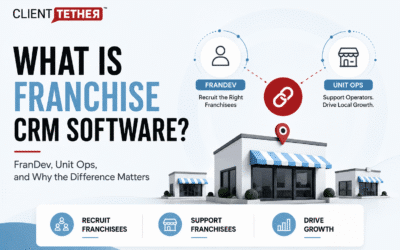
A franchise CRM is a system that manages the full franchise candidate pipeline, from initial inquiry to signed agreement.
It gives franchisors clear visibility into each stage, tracks follow-ups, and ensures key steps like FDD delivery happen on time, helping them forecast growth and avoid losing candidates.
Manual tracking works fine when you’re managing five or ten active candidates. That spreadsheet approach stops working once pipeline complexity increases.
It’s time to move to a franchise CRM built for franchise development software workflows.
Franchise CRM candidate pipeline visibility determines whether you can forecast growth or just hope for it.
Manual tracking works early on but breaks down as pipelines become harder to manage, creating a hard growth ceiling.
CRM-based pipelines give real-time visibility into your candidates. They also track how fast deals move and show where things slow down.
This helps prevent candidate loss, which directly impacts revenue.
- Pipeline visibility equals growth forecasting ability
- Manual tracking adequate for 5–10 awards, breaks at 20+
- Lost candidates carry significant franchise fee opportunity cost
- Speed-to-lead (how quickly you respond to a new candidate inquiry) within the first few hours significantly impacts conversion rates
- Velocity metrics reveal exactly where deals stall
Who This Is For
Best for: Franchisors managing 10–200+ units, FranDev teams targeting 15+ awards per year, multi-rep development teams needing shared pipeline visibility
Not ideal for: Emerging franchisors with fewer than 5 active candidates (manual tracking still adequate), single-location businesses not planning franchise expansion
Top use cases: Forecasting annual award goals, preventing candidate loss from follow-up failures, identifying pipeline bottlenecks, coordinating multi-rep teams
Why Franchise CRM Pipeline Visibility Determines Growth Predictability
In most cases, without pipeline visibility, franchisors cannot forecast growth or reliably hit franchise award targets.
Your Pipeline IS Your Growth Engine
In practice, franchise growth depends entirely on your franchise CRM pipeline. Without clear visibility, you can’t forecast growth, and without that, hitting your targets becomes guesswork.
As a result, FranDev (franchise development) teams without systematic pipeline tracking operate blind. They don’t know if they have enough candidates in the funnel to hit annual award goals. They can’t identify why deals stall at specific stages. They have no way to forecast revenue from franchise fees.
According to the 2025 IFA Franchisor Survey findings on franchise growth pressures, franchisors continue facing pressure to demonstrate growth amid economic constraints. This makes predictable pipeline management more important than ever.
Ultimately, this isn’t about being organized. It’s about being able to answer the question: “Will we hit our growth targets this year?”
In practice, franchise development teams reach a point where manual tracking can no longer keep up with pipeline complexity. At that stage, the problem isn’t volume — it’s lack of visibility.
You need clear stage visibility, automated follow-ups, and data on how candidates are moving through the pipeline—otherwise small gaps start compounding into lost opportunities.
Where Candidates Get Lost Without Systematic Tracking
Without a CRM, candidates disappear between stages, because nothing triggers the next follow-up. Reps forget discovery day calls when they’re juggling 20 other conversations. FDD delivery gets missed because it’s buried in a notebook.
By the time you notice a candidate has gone quiet, they’ve already moved on. And every one of those lost candidates had a franchise fee attached.
The Growth Ceiling: When Manual Tracking Breaks
At first, manual pipeline tracking is adequate for 5–10 active candidates. It breaks when candidates become too difficult to track consistently and spreadsheets fall out of sync. At that point, real-time visibility disappears entirely.
At that point, this is where a franchise CRM becomes necessary. Ten awards per year? Achievable manually. Twenty-five awards per year? You need a franchise CRM built for this scale.
How does a franchise CRM enable pipeline visibility and growth?
Systematic pipeline management in franchise CRM software enables growth by providing real-time visibility, structured stages, and measurable velocity across all candidates.
Pipeline Stages That Match the Franchise Sales Cycle
Franchise candidate journeys require FranDev-specific stages:
- Inquiry → Qualification → Nurture → Discovery Call → Validation Calls → Discovery Day → FDD Delivered → Legal/Financing → Award. Each stage typically takes 3–6 weeks.
In contrast, generic sales stages don’t work here — B2C and SaaS pipelines weren’t built for this cycle.
Structured stages enable velocity tracking (how fast candidates move) and bottleneck identification (where they get stuck). Without properly defined stages, you’re moving names around with no insight into what’s actually working.
Real-Time Visibility Into Candidate Status and Next Actions
A franchise CRM gives you a clear view of what matters most:
- Every active candidate
- Their current stage
- How long they’ve been in that stage
- The next required action
- The rep responsible for the relationship
- A complete contact history
Because of this, it’s the bird’s-eye view that prevents candidates from stalling unnoticed.
Velocity Metrics That Reveal Bottlenecks
In a franchise CRM, the key metrics that drive franchise growth are:
- average days per stage
- stage conversion rates
- total inquiry-to-award timeline.
Velocity tracking shows you exactly where your pipeline stalls. For example, you might discover candidates are spending 45 days in the Nurture stage but only 12 days in Discovery Call. That tells you the bottleneck isn’t the calls — it’s moving candidates to schedule that call.
Once you can see the data, you can fix the process.
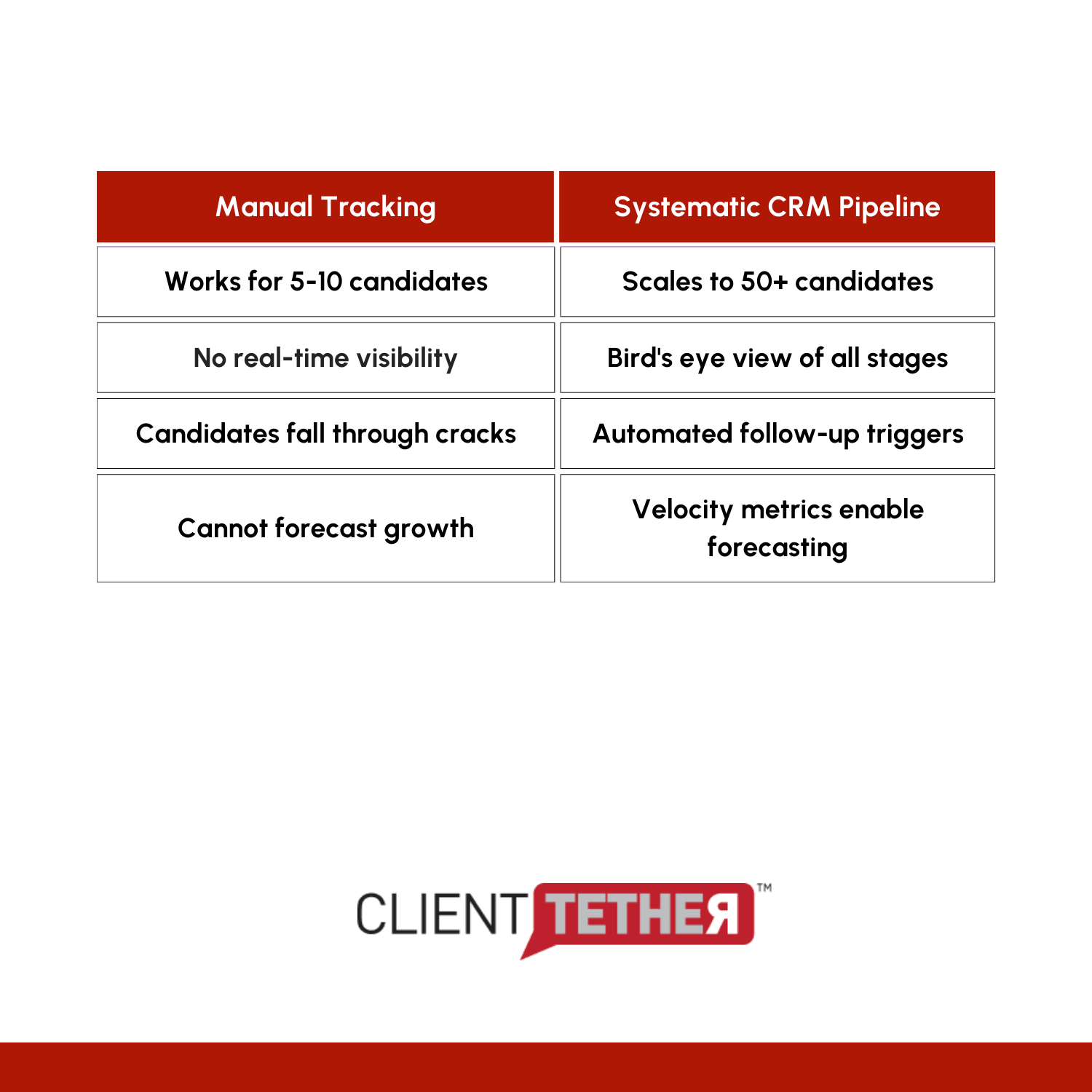
Alt: Franchise CRM candidate pipeline comparison: manual tracking vs CRM pipeline showing visibility, scalability, follow-ups, and forecasting differences
When does pipeline chaos cost you franchise growth?
Ultimately, pipeline chaos directly reduces franchise revenue by causing lost candidates, slower response times, and missed conversion opportunities.
The Revenue Impact of Lost Candidates
For instance, each lost candidate represents a significant franchise fee — plus ongoing royalties for the life of that franchise.
For a franchisor targeting 20 awards per year, even a few candidates lost to pipeline chaos creates a measurable gap between the growth plan and actual results.
Speed-to-Lead and Why It Matters in Franchise Sales
Franchise candidates usually research three or four brands at the same time. The first one to respond often wins.
A 2026 report on franchise technology trends identifies speed-to-lead responsiveness as a key operational differentiator. Franchisors that automate their initial response consistently outperform those that rely on manual outreach.
A franchise CRM is required to deliver that speed-to-lead consistency. You need automated response combined with immediate rep notification to compete effectively.
The Breaking Point: Growth Targets That Require a System
Manual pipeline tracking is adequate in early-stage systems with limited pipeline complexity. Franchise CRM software becomes non-optional when you’re targeting 15+ awards per year or running a multi-rep FranDev team.
Shared spreadsheets stop working when multiple reps are updating the same candidates. And if you need growth forecasting for capital planning — or simply can’t afford to keep losing candidates to follow-up failures — the manual approach has already hit its ceiling.
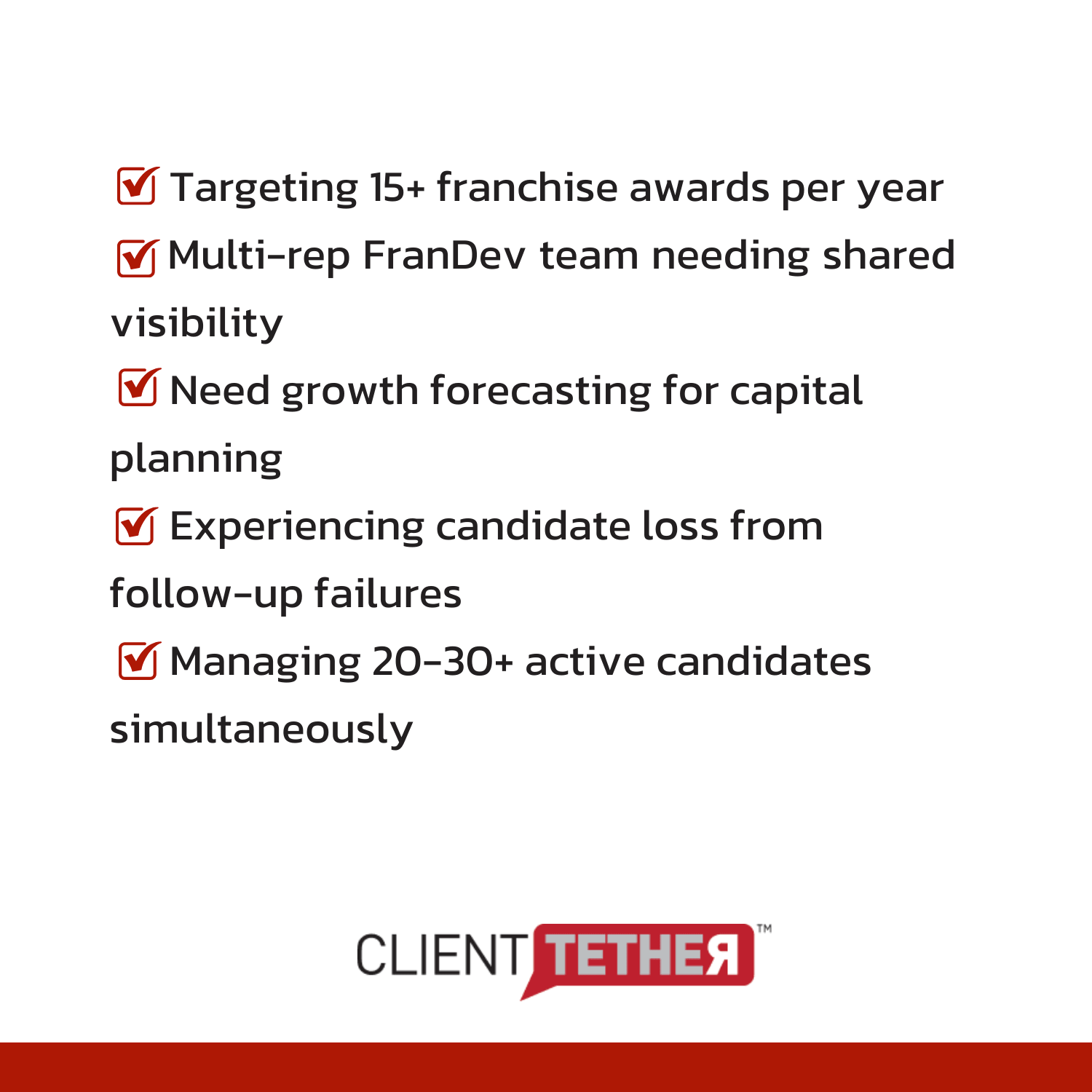
The conditions that consistently signal a systematic pipeline has become necessary:
☐ Struggling to maintain visibility across active candidates
☐ Managing a multi-rep team that shares candidates
☐ Need growth forecasting for capital or resource planning
☐ Losing candidates to follow-up gaps or timing failures
☐ Managing 20–30+ active candidates simultaneously
Implementation decisions should be evaluated based on your specific franchise structure, team size, and growth stage.
Franchisors managing 15+ active candidates across a multi-rep FranDev team typically need:
- a franchise CRM platform that provides real-time pipeline visibility
- automated follow-up triggers
- velocity data across every candidate stage.
ClientTether’s franchise CRM software is built specifically for that operational structure — from first inquiry through franchise award.