Franchise brokers sit in a powerful spot in the ecosystem. They’re often the ones guiding people as they take their life savings, step away from traditional careers, and bet big on a brand and a future they can own.
For years, though, brokers have operated in a space with far less structure and regulation than other professionals who influence major financial decisions. Realtors are licensed. Investment advisors are licensed. But franchise brokers? In many cases, anyone with a website and a Zoom link can call themselves a “consultant.”
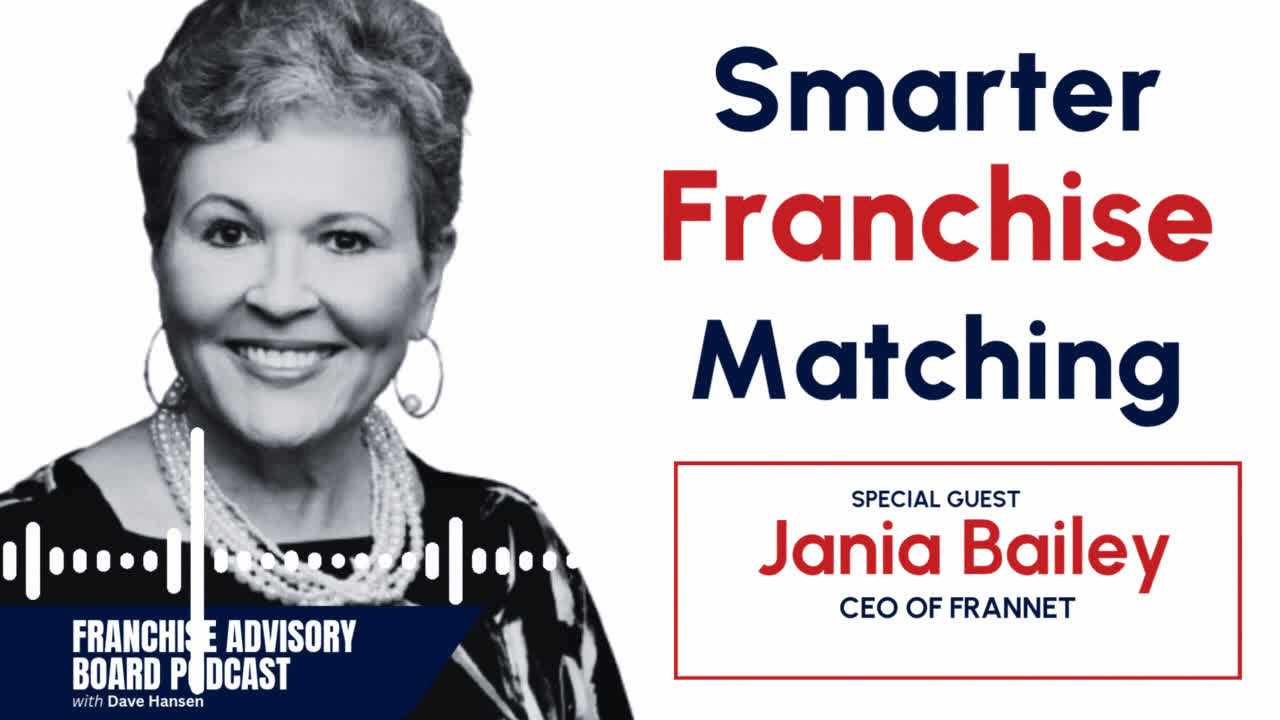
That’s changing—and my guest on this episode, Jania Bailey, believes it’s overdue.
In this conversation on The Advisory Board Podcast, powered by ClientTether’s franchise CRM, Jania and I dig into what California’s legislation, NASAA’s involvement, and a new push for transparency really mean for:
- Brokers and consultant groups
- Franchise brands
- Candidates and consumers who rely on our advice
If you care about higher-quality deals, better-aligned incentives, and a healthier franchise ecosystem, this is a conversation you need to pay attention to.
Meet Jania Bailey
If you don’t know Jania Bailey, you’ve probably not been in franchising very long.
She’s the CEO of FranNet, one of the longest-running and most respected franchise consulting organizations in the industry. FranNet has been operating for 38 years, with consultants across the U.S., Canada, and even a presence in Germany. Jania has:
- Served six years on the IFA executive board
- Received the Bonny Levine Award in 2019 for her impact, leadership, and mentorship of women in franchising
- Led FranNet through its evolution from a membership-style organization to a scaled, franchise-based consulting group with serious operational support behind its brokers
In the episode, I joke that if you don’t know her, I’m not sure which rock you’ve been living under—and I mean that with all the admiration in the world:
“If you guys don’t know Jania, I’m not sure which rock you’re living under, but she’s the CEO of a group called FranNet. They have a sterling reputation… and arguably the best reputation in the industry for high quality candidates that are going to brands.”
She’s also not just a sweet, steady presence on stage. She grew up riding horses and bought her first Harley Sportster at 40. That mix of warmth and grit comes through clearly as she talks about what needs to change in the broker world—and why.
Regulation Is Coming to Brokerage—and It’s Overdue
A big part of our conversation centers on California’s broker legislation, slated to go into effect in 2026, and how NASAA (the North American Securities Administrators Association) is using it as a template for broker registration and disclosure standards across other states.
Jania’s take is simple: this shift is overdue.
She’s not hand-wringing about the change; she’s wondering why it took so long. In her view, when you look at the size of the investments and the life impact of franchise decisions, having effectively no professional licensing or required registration for brokers just doesn’t add up.
“If I’m king for the day somewhere in the future, I would actually require that we be licensed… When you look at the impact that we can have in people’s lives and the dollars that are involved, it’s almost shocking that we’re not licensed.”
California’s process—and NASAA’s involvement—will likely lead to:
- Broker registration and filing requirements at the state level
- More standardized expectations for what brokers must disclose
- A higher bar to simply “hang a shingle” and call yourself a consultant
From my vantage point, this is going to feel uncomfortable for some people in the short term, but it sets the stage for brokerage to look more like the profession it already functions as.
Transparency Is Non-Negotiable if You Want to Be a Trusted Advisor
One of the strongest themes from Jania is transparency.
Long before regulation forced the issue, FranNet created its own broker disclosure document—about 9–10 years ago—and encouraged peers to follow suit. Most didn’t. Now, California and NASAA are essentially telling the sector: transparency is no longer optional.
Jania’s concern is that many candidates don’t actually understand how brokers are paid, or how limited some groups’ brand portfolios really are. That’s a problem when you’re positioning yourself as an advisor.
“We’re supposed to be trusted advisors, and how can we be trusted advisors if we’re trying to hide behind some information that we’re so scared would run our clients off?”
A few specific transparency points she highlights:
- Compensation clarity Candidates should understand that brokers are paid if a placement is made and who is paying them. Everybody knows money is changing hands somewhere; putting it on paper respects the candidate instead of patronizing them.
- Portfolio visibility If a broker group is heavily concentrated in certain sectors (say, home services or health and beauty), candidates should know that. If they’re not seeing certain concepts, it might not be because those brands are “bad”—it may simply be that the broker doesn’t represent them.
- Ethical standards Jania is blunt about brokers who make repeated earnings claims in email blasts and oversell incentives: those practices give the entire broker community a black eye. Stronger disclosure requirements will force some of those bad actors out of the system, and that’s a net positive.
Regulation Will Reshape Where Deals Happen
Policy doesn’t just change paperwork; it changes where economic activity flows.
We’re already watching some franchisors avoid certain states due to regulatory friction and legal cost. Jania expects similar behavior from brokers as broker registration tightens:
“I think some brokers will avoid certain problem states just like we see franchisors doing now… and then the states will have to face the fact they’re hurting the economy of their state by being over the top.”
During the conversation, I share what I’ve been hearing from brands:
- “We’re not going to register in California.”
- “We’re avoiding New York and Washington.”
These aren’t ideological stances; they’re pragmatic responses to legal advice.
The likely impact:
- States with heavy franchising red tape will lose out on new concept launches and expansions.
- Ambitious franchise buyers may simply move to friendlier states (Arizona, Florida, Idaho, Texas) where both franchisors and brokers can operate with less friction.
- Economic development and tax revenue will follow those choices.
Regulators absolutely should protect consumers—but when they overshoot, the long-term unintended consequence is that entrepreneurs and deal flow go elsewhere.
More Disclosures Can Help—or Completely Overwhelm—Candidates
One unintended consequence of broker registration and disclosure rules is information overload.
If candidates:
- Fill out multiple portals
- Get connected to several brokers at once
- Explore multiple brands through those brokers
…they may end up facing:
- Several broker disclosure documents
- Multiple FDDs
- 10–15 brands to “analyze” at once
Jania and I both see a danger there: if everyone simply dumps disclosures on candidates without coaching, we’re not doing our jobs.
“When somebody goes to a discovery or meet-the-team day, they need to be like 95% ready to sign up… If they’re going to multiple discovery days, those clients are still confused.”
A few practical takeaways for brands and brokers:
- Fewer, better-qualified options Don’t show 10–15 brands just because you can. Narrow the list to what truly fits the candidate’s goals, risk profile, capital, and skills.
- Treat discovery days as late-stage, not tire-kicking A discovery or meet-the-team day should be where candidates go to confirm a decision, not where they start thinking about one.
- Coach candidates on how to read disclosures FranNet already walks clients through what to look for in FDDs. Jania expects they’ll do something similar with broker disclosures so candidates aren’t starting from scratch on each one.
Disclosure and transparency are good things. But they only serve the candidate if we help them interpret and prioritize what matters most.
Not Every Brand Is Ready for Brokers—and That’s Okay
One of the more uncomfortable truths from this episode is that brokers are not for every brand.
There’s a temptation, especially for emerging franchisors, to see brokers as a silver bullet: “If we just get into a broker group, we’ll grow.” Jania’s criteria at FranNet say otherwise.
“We do not [take everyone]. We ask that the brand have a solid proof of concept… We want to see that they’re able to operate without the founder being an influence in each of those… I always tell franchisors, be sure your house is in order.”
Here’s what “ready” looks like in her world:
- Proof of concept beyond the founder’s location The business has to work when someone other than the founder runs it. That means the systems, support, and model are transferable.
- Strong early-stage validation If a relatively young system’s franchisees are saying, “This isn’t what I thought; I wouldn’t sign again,” that’s a non-starter. FranNet won’t recommend a brand that can’t deliver on its own promises.
- Operational infrastructure and support Brands stuck in the “desperation cycle”—needing every next deal to make payroll—are not ready for broker-driven growth. They need more field support, better operations, and financial stability first.
- A focus on the right growth, not just more units Chasing a magic number of units (100, 200, etc.) to impress private equity, while neglecting existing franchisees, is a recipe for long-term damage.
As I told a friend at a recent conference who was eager to get into broker channels: if you’re not operationally ready, plugging into brokers can actually speed up your path to implosion, not success.
Healthy Economics and Real Data Will Separate the Pros from the Pretenders
Brokers earn a living through placements. Franchisors need enough margin in the system to:
- Pay a fair broker fee
- Support franchisees
- Maintain realistic ROI and unit economics
That balance is non-trivial, especially for undercapitalized concepts.
“We all know the number one reason a business fails is lack of capitalization… You have to decide, can you afford it? Is it realistic for you? Brokers are not for everybody. You’ve got to be sure you’re prepared and financially able to work with brokers… Don’t jump into the deep water until you know how to swim.”
Jania shares a couple of important markers:
- A reasonable entry point for broker fees is around $25,000+.
- Many deals she’s seeing now carry broker fees in the $30,000–$35,000 range, depending on single vs. multi-unit structures.
- The question isn’t “Can we tack on another fee?” but “Does the total investment and unit performance support this structure in a way that’s still good for the franchisee and the brand?”
At the same time, the regulatory trend is pushing everyone toward better data:
- How do broker-sourced leads perform compared to other channels?
- What are conversion rates and timelines by source?
- How successful are broker-placed franchisees over time?
On that front, Jania doesn’t mince words with franchisors who hesitate to share:
“We’ve tried a couple of times to get the reports of our success rate compared to other things and it’s really hard with some franchisors… We’ve just got to all get over ourselves and be willing to share that information that will help us all do a better job for the candidates.”
As regulation, registration, and disclosure increase, brands and brokers that can:
- Prove performance with real data
- Price their fees responsibly
- Support long-term franchisee success
…will stand out from those who are winging it.
Wrap-Up Thoughts
As someone who has watched this industry evolve over the years, I walked away from this conversation with Jania more convinced than ever that the franchise brokerage world is entering a new era—one defined less by instinct and tradition and more by data, professionalism, and transparency.
These changes aren’t about red tape for the sake of red tape. They’re about raising the bar for everyone involved:
- For brokers who want to be seen as true advisors rather than deal makers.
- For franchisors who need to build systems that can withstand deeper scrutiny.
- For candidates who deserve clarity, honesty, and expertise as they make one of the biggest financial decisions of their lives.
And the truth is this: the groups, brands, and individuals who lean into transparency early… who organize their data and tell the truth about what works and what doesn’t… who invest in real support rather than shortcuts… they’re the ones who will win in this next chapter of franchising.
Regulation may be the catalyst. But professionalism—the kind Jania has been beating the drum for long before laws were drafted—is what will define the future.
If you’re a broker, a franchisor, or someone exploring business ownership, this isn’t just a conversation about compliance. It’s a conversation about earning trust in an industry built on long-term commitments.
And I think Jania is right: it’s overdue.
Listen & Watch the Full Conversation
Watch the full episode on YouTube
Check out the Podcast Hub Channel
Connect with Jania Bailey and FranNet